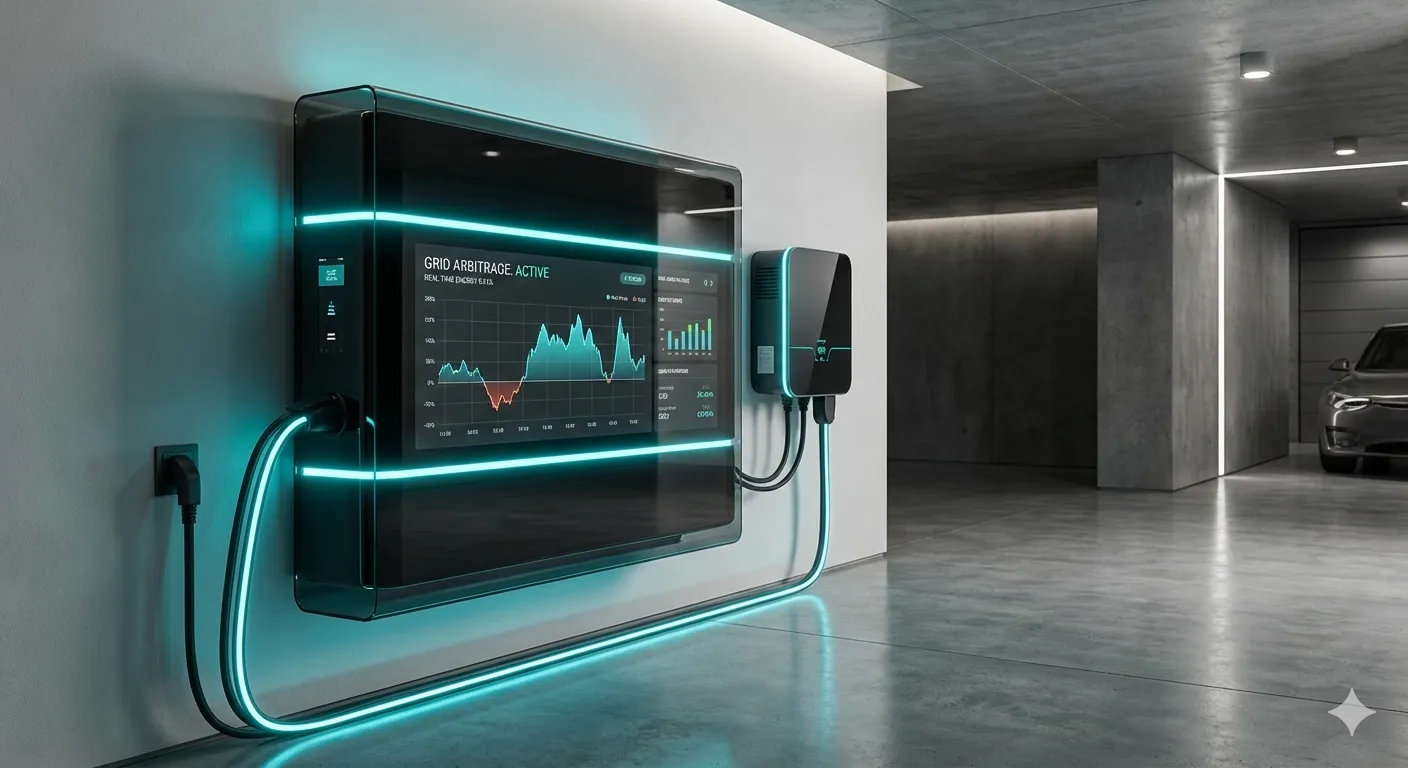
The electrical grid is no longer a utility. It is a volatile financial market, and you are currently on the losing side of the trade.
For decades, homeowners have been “Passive Consumers”—buying electricity at whatever price the utility dictates, usually during peak hours when rates are highest. In the 2026 Solar Supercycle, this model is obsolete.
The new paradigm is Energy Arbitrage. By treating your home as a decentralized power plant, you can buy energy when it is worthless (nighttime) and sell it (or offset it) when it is precious (peak demand).
This is not about “saving the planet.” This is about Yield.
The Math of the Trade
Utilities operate on Time-of-Use (TOU) schedules. They charge you a premium to use power when everyone else is using it (4:00 PM - 9:00 PM).
- Off-Peak (2:00 AM): $0.08 / kWh (Supply exceeds demand)
- Peak (6:00 PM): $0.35 / kWh (Demand exceeds supply)
The spread is $0.27 per kWh.
If you are a Passive Homeowner, you are buying at the top of the market every single day. You are the “dumb money.”
The Arbitrage Table
| Metric | Passive Homeowner (Renter) | Active Trader (Owner) |
|---|---|---|
| Strategy | Buy at Market Rate | Buy Low / Sell High |
| Peak Rate Cost | $0.35 / kWh | $0.00 / kWh (Battery Discharge) |
| Grid Reliance | 100% | 10% (Backup Only) |
| Monthly Bill | $350.00 | $45.00 |
| Asset Value | $0 (Sunk Cost) | +$15k (Hardware Equity) |
Alpha Insight: The utility company is betting that you will be too lazy to automate your energy usage. They profit from your inefficiency.
Phase 1: Reconnaissance (The Audit)
Before you deploy capital into heavy infrastructure, you need intelligence. You cannot optimize what you do not measure.
Most homes have “Energy Vampires”—devices that bleed power 24/7, destroying your arbitrage spread. Old fridges, gaming consoles, and DVRs are the usual suspects.
Your Mission: Audit your base load.
We recommend deploying tactical monitoring sensors to map your consumption profile. You don’t need a full panel upgrade yet. Start with a simple plug-load monitor.
Recommended Tool: P3 Kill-A-Watt Usage Monitor or a Smart Energy Plug.
- Cost: ~$25
- ROI: Immediate upon identifying one vampire load.
Use this to find the baseline. Once you know your “Idle Load” (how much power your house uses while you sleep), you can size your battery bank.
Phase 2: The Server Hardware (Deployment)
Once you have the data, it is time to build the rig. In the Solar Supercycle, we do not buy “consumer appliances.” We buy Server-Grade Energy Hardware.
You need two components to execute the Arbitrage Protocol:
- The Logic (Inverter): The brain that manages the trade.
- The Vault (Battery): The tank that holds the asset.
The Inverter: EG4 18kPV
This is not a standard solar inverter. It is a hybrid grid-interactive server. It allows you to:
- Pull from the grid at 2:00 AM (Cheap).
- Pull from solar at 12:00 PM (Free).
- Sever the connection at 5:00 PM (Peak).
It automates the trade. You set the schedule once, and it executes daily.
The Battery: EG4 LifePower4 (LiFePO4)
Forget the sleek white plastic boxes sold by door-to-door salesmen. Those are overpriced toys.
The LifePower4 is a server-rack battery. It uses Lithium Iron Phosphate (LFP) chemistry, which is safer and lasts longer (15+ years) than the older NMC batteries found in EVs.
- Capacity: 5.12 kWh per unit.
- Scalability: Stack them like servers in a rack.
- Cost: A fraction of the price per kWh compared to “Name Brand” systems.
The Execution
- Install the Hardware. (Hire a licensed electrician for the final tie-in).
- Program the Inverter. Set “Grid Charge” to 02:00 - 05:00. Set “Force Discharge” (or Self-Consumption) to 16:00 - 21:00.
- Watch the Spread. Your meter stops spinning during peak hours. You are now trading energy, not just consuming it.
Final Intelligence
The window to acquire this hardware at current prices is closing. As the 2026 Supercycle ramps up, demand for LFP cells will spike due to EV mandates and data center backup requirements.
We track global hardware inventory levels daily.
Join the Intelligence Feed. Get alerts when server-rack batteries drop in price or when new Federal Rebates go live.
Subscribe to Hardware Alerts »Stop renting. Start trading.